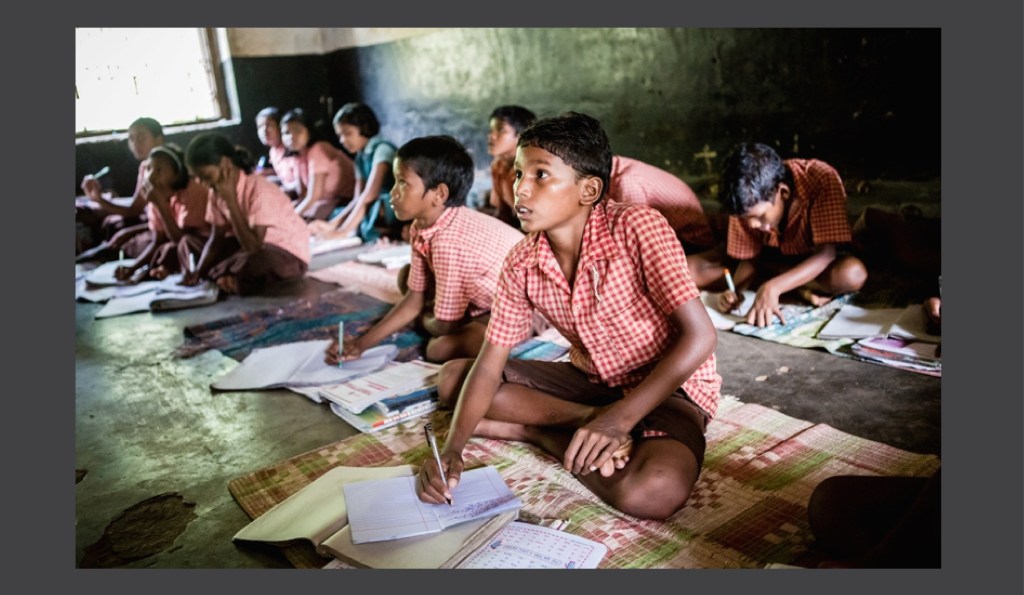
Image courtesy: International Policy Digest
15 Creatives from across the globe were selected by Distributed Design Platform to participate in a rigorous summer camp with Precious Plastic. The goal was to address the issue of plastic pollution and create a product utilizing Precious Plastic’s recycled beams with the theme – “Plastic for good and social innovation”.
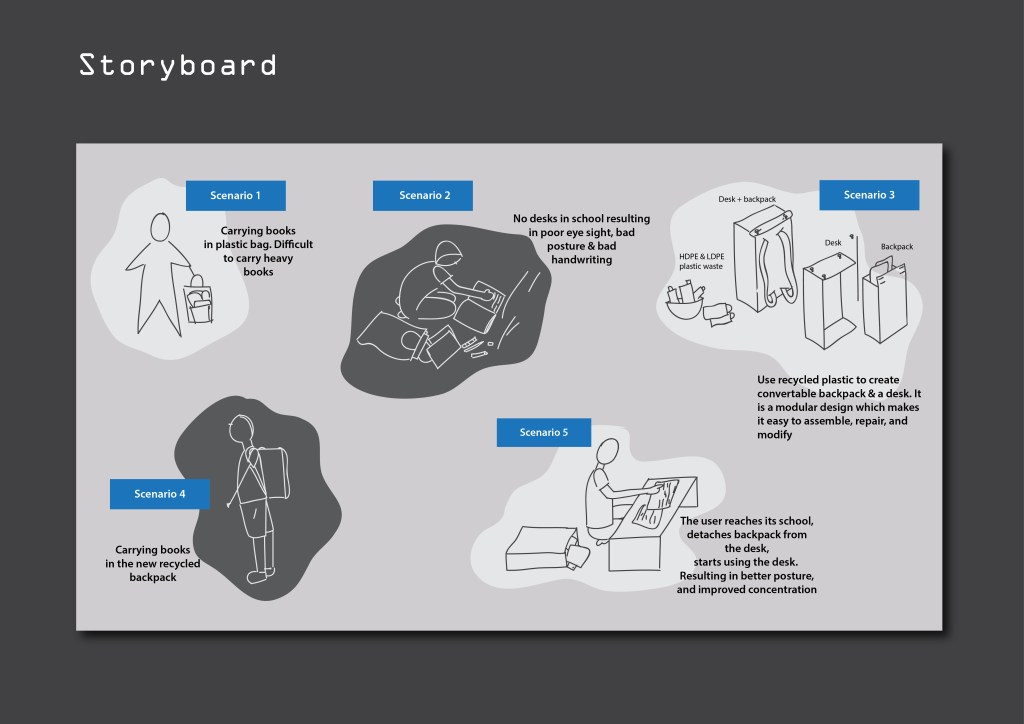
Problem: Many of the things which are taken for granted in schools of developed countries such as desk, backpack, chair are often considered a luxury for underpriviliged students. Many times they lack access to bags and carry books in flimsy plastic bags for long distances. Upon reaching school, they don’t have desks and chair, so they sit on the floor and study. This results in spinal issues, poor hand writing and poor eyesight.
Solution: A backpack which could be converted to a desk. Students can easily carry it for long distances with their books in it and since it is portable, it can be conveniently used in school as well as other setup.
My Role: I collaborated with two makers adept at using machineries to realize this project. My role as a product designer included testing the properties of the materials like strength, optimal bending temperature and ultimately designing a user friendly product.
Keywords: recycled plastic, social innovation, underpriviliged, convertable backpack & desk, portable, creative, environment friendly, product design
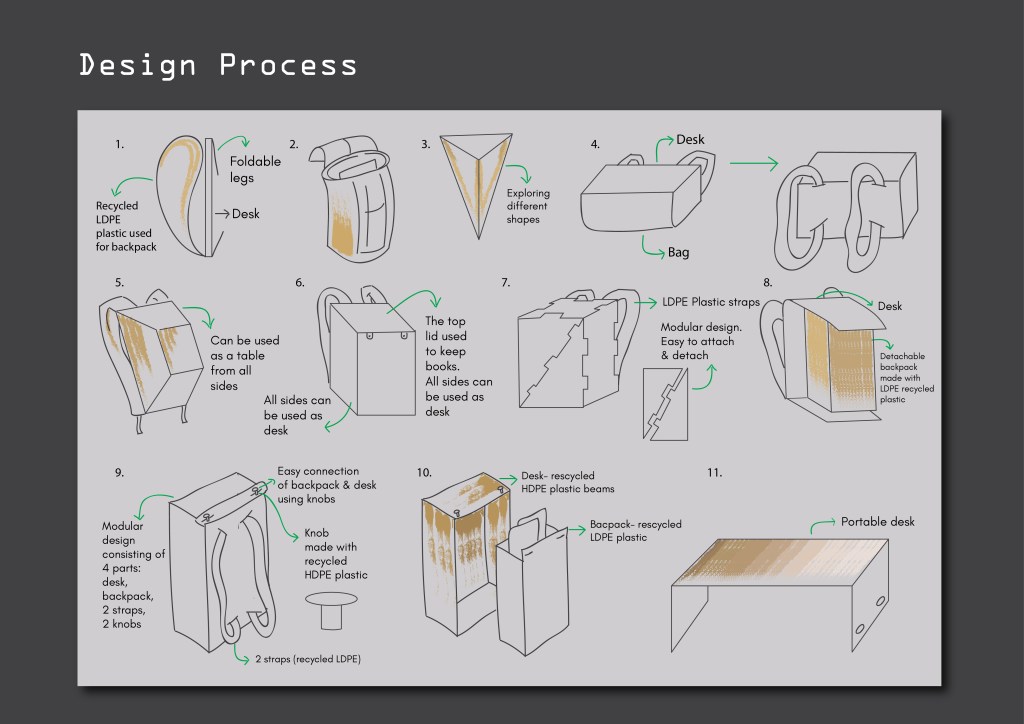
I initiated the project by evaluating available materials and identifying challenges in developing countries that could be addressed by repurposing abundant plastic waste worldwide.
Recycled plastic has high cost and energy consumption. Therefore, the designs and prototypes have to be well thought of to reduce wastage. Hence, I collaborated with the precious plastic team to refine designs and prototypes
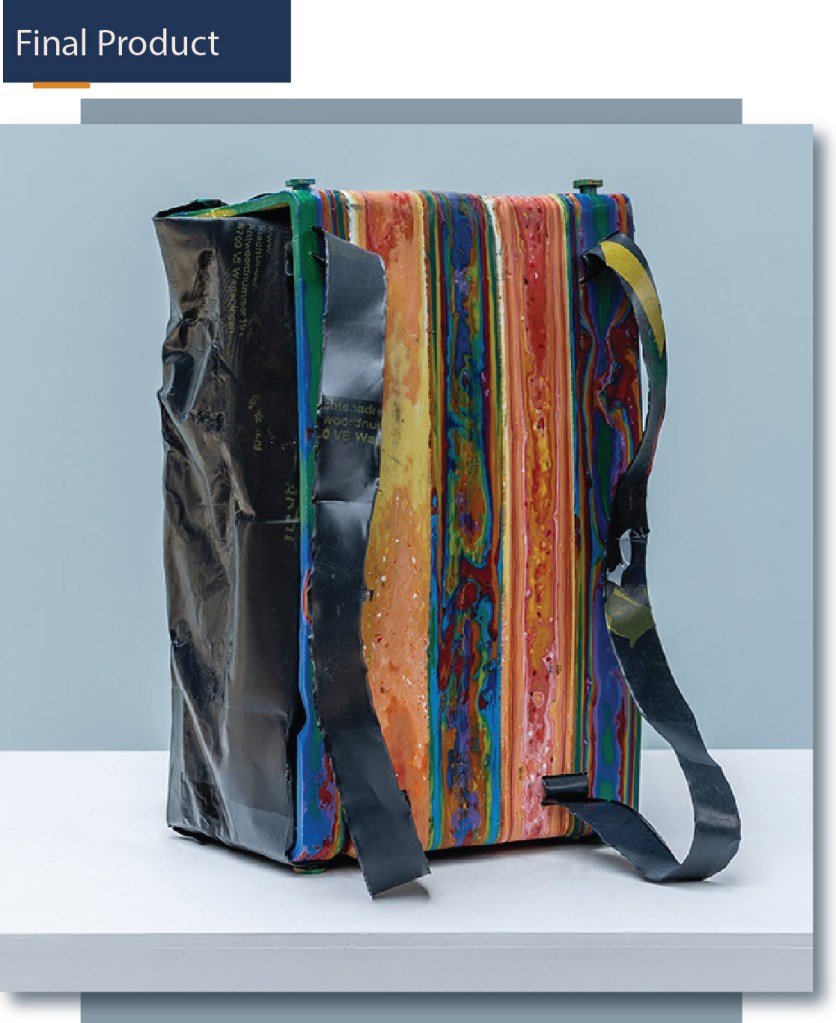
Employing a human-centered design approach, I created a convertible backpack and desk, integrating circular economy principles. The carefully crafted design prioritizes ease of repair, no additional materials, like screw, button or adhesive are used in the assembly, and facilitates product disassembly for recycling, supporting a sustainable product lifecycle.

Utilizing industrial cutting machines, I successfully transformed beams into 10 lightweight, portable, and colorful 2mm-thin strips, showcasing playful characteristics.
After this, I tested various physical properties of the high-density polyethylene (HDPE) beams, including strength, flexibility, rigidity, and deformation temperature. Using an industrial heat gun machine, I exposed the beam strips to different temperatures, and learnt that the ideal temperature to bend is 80°. The threshold being 120°, and 70° being the softening range.
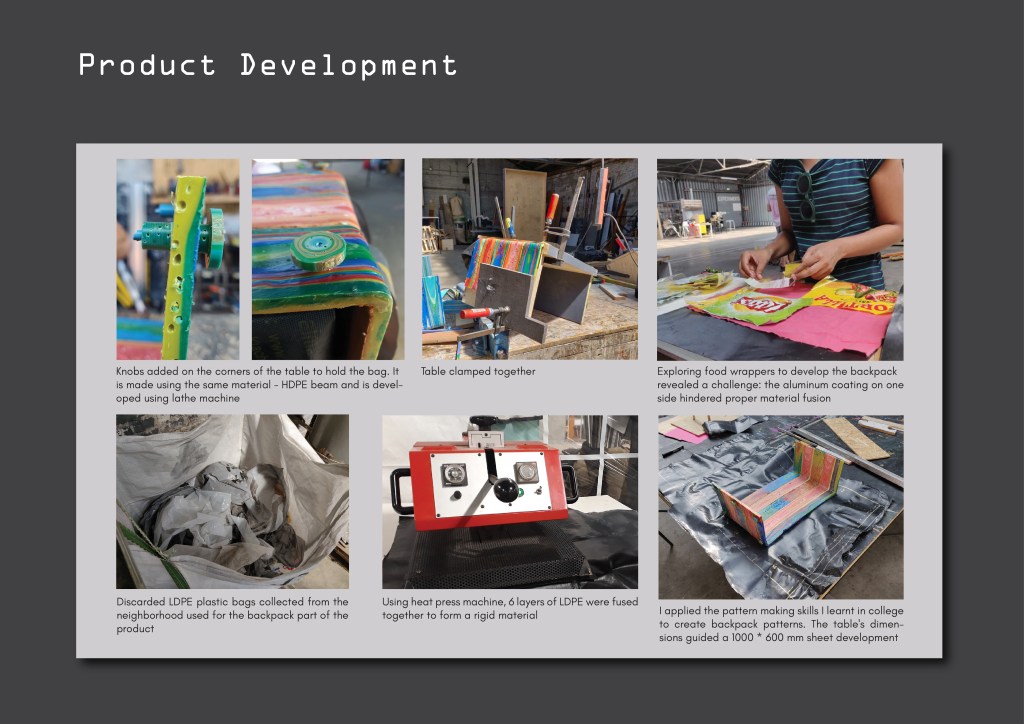
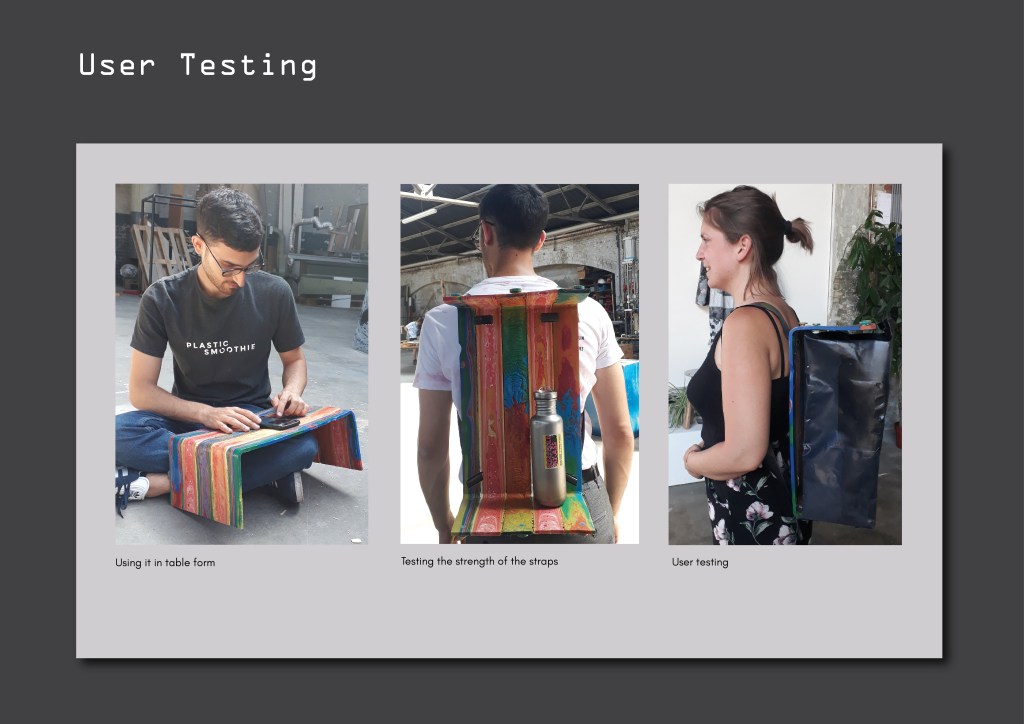
Once the table was made, we conducted user-testing. The feedback received through these tests revealed that an all-HDPE design was too heavy for young users. To resolve this issue, I repurposed low-density polyethylene (LDPE) plastic bags into a fabric-like material capable of supporting books while reducing the overall weight by 90%.
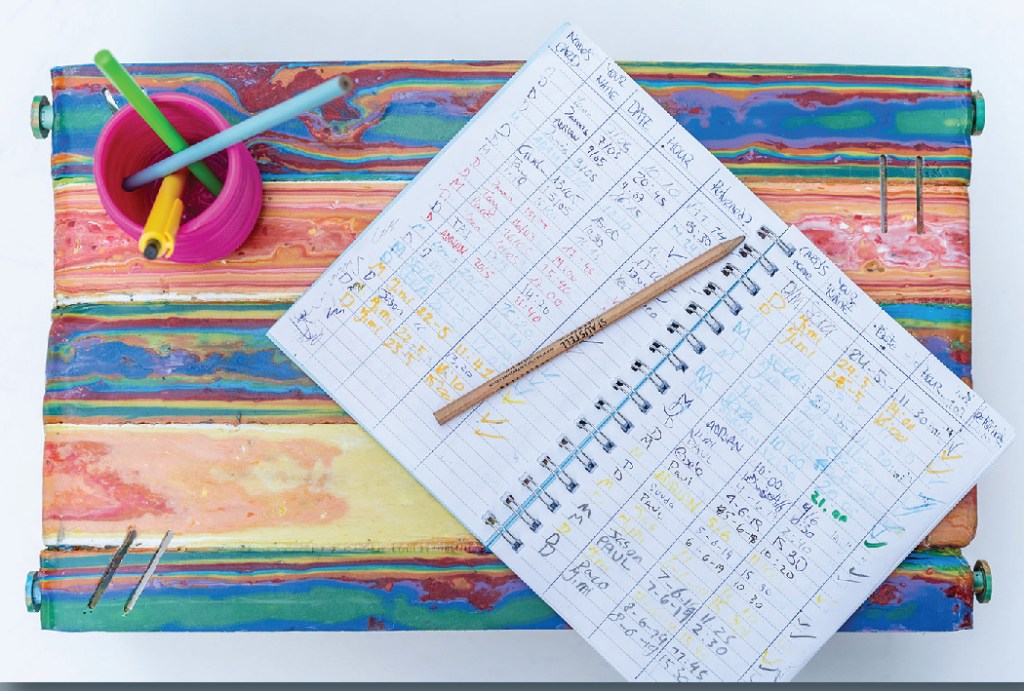
The straps of the backpack are designed to be playful like the table. Print is made using leftover LDPE bags. Once the backpack and the table were ready, it was attached together using the knobs on the table, which also act as a button for the backpack. Precious Plastic added it’s stamp on the product for easy identification of the materials used in the product.

 nidhimittal.in